September 11: We Remember
Twenty-Five Years Later, We Remember the Loss - and the Life That Continued


2001 – 2026 | 25 Years of Remembrance
There are dates we remember because something wonderful happened.
A wedding. A graduation. The birth of a child.
And then there are dates the world remembers.
September 11, 2001, is one of those dates.
Twenty-five years ago, nearly 3,000 people went to work, boarded airplanes, reported for duty, or simply began an ordinary Tuesday morning and never returned home.
Behind every number was a person.
A husband. A wife. A father. A mother. A son. A daughter. A friend.
And behind many of those people was a family whose life changed forever.
Today, we remember those who died at the World Trade Center, the Pentagon, and aboard Flight 93. We also remember the firefighters, police officers, paramedics, military personnel, and ordinary citizens who ran toward danger when every instinct must have told them to run away.
The National September 11 Memorial & Museum preserves their stories while honoring the victims, survivors, families, and those who responded in the aftermath of the attacks.
But on this 25th anniversary, there’s another part of the September 11 story worth remembering.
Even on one of America’s darkest days, life continued.
Babies Were Born on September 11

While much of the country watched in horror, maternity wards across America were experiencing something entirely different.
Babies were being born.
In fact, 13,238 babies were born in the United States on September 11, 2001.
Think about that for a moment.
Thousands of families experienced one of the happiest moments of their lives on one of the saddest days in American history.
One of those babies was Caleigh Leiken.
Caleigh was born in New York City. Her mother, Erika, was eight-and-a-half months pregnant and working just blocks from the World Trade Center when the attacks occurred. She made her way approximately five miles uptown before reuniting with her husband. Later that afternoon, after realizing she could no longer feel her baby moving, the couple headed for the hospital. Following a cab ride and police escort through barricaded streets, Caleigh was born by emergency C-section at Mount Sinai Hospital at 5:15 p.m.
Outside the hospital, New York was grieving.
Inside, parents were holding their newborn daughter.
Birth doesn’t erase death. Joy doesn’t cancel grief.
Sometimes they exist side by side.
Years later, Caleigh returned to New York and visited the Memorial. The 9/11 Memorial & Museum’s account of Caleigh Leiken’s remarkable birth story offers a moving look at what it meant to be born on a day remembered primarily for death.
Other Children Arrived After Their Fathers Were Gone
There was another group of babies whose connection to September 11 was even more personal.
Their mothers were pregnant when their fathers were killed.
ABC News once brought together 16 mothers who gave birth after losing their husbands in the World Trade Center attacks.
Those children entered the world already carrying a family story they would spend years learning to understand.
They would know their fathers through photographs, stories, relatives, home videos, and the memories other people shared with them.
For those mothers, there must have been an unimaginable mixture of emotions—mourning the husband they loved while welcoming the child they had created together.
Yet they kept going.
They raised children.
They celebrated birthdays.
They attended school programs, graduations, sporting events, and countless ordinary family moments.
Life continued.
Some Families Eventually Became Blended Families
For Support for Stepdads, there’s another chapter of the September 11 story that receives far less attention.
Some surviving spouses eventually fell in love again.
Some remarried.
And some created blended families.

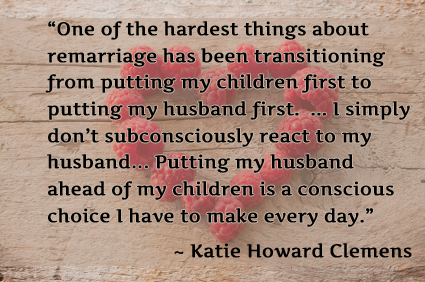
That didn’t mean forgetting the husband or wife who died on September 11. Instead, these families had to learn something many blended families understand: loving the family you have today doesn’t require erasing the family that came before it.
Jill Gartenberg Pila knows that firsthand.
Jill’s husband, James Gartenberg, was killed at the World Trade Center. She was left to raise their two young daughters, Jaime and Nicole.
Years later, Jill remarried.
Her new husband, Jay, understood profound loss himself because his first wife had also died. Jay brought two children into the marriage. Jill brought her two daughters.
Four children. Two parents. Two families touched by loss.
And eventually, one new blended family.
Their story wasn’t about replacing anyone.
James would always be Jaime and Nicole’s father. Jay’s late wife would always be part of his children’s story.
Instead, Jill and Jay created something new while respecting what came before.
That’s one of the quiet truths of healthy stepfamily life.
A stepdad doesn’t have to compete with a child’s biological father—living or deceased—to have an important place in that child’s life.
There can be room for both.
Moving Forward Doesn’t Mean Leaving Someone Behind
Another 9/11 widow, Susan Retik, eventually remarried after losing her husband David aboard American Airlines Flight 11. She continued raising their children and later welcomed another daughter. Rather than allowing David’s memory to become defined solely by terrorism, Susan devoted herself to helping widows affected by war in Afghanistan.
Her story reminds us that moving forward and remembering aren’t opposites.
That’s true far beyond September 11.
Families change because of death, divorce, remarriage, adoption, separation, reconciliation, and circumstances no one expected.
A family after loss won’t look exactly like the family before it.
It can’t.
But different doesn’t have to mean lesser.
Remember the Empty Chairs
Twenty-five years is a long time.
A baby born on September 11, 2001, turns 25 this year.
Children who lost parents that morning are adults now. Some have married. Some have children of their own. Some are now older than their parents were when they died.
Yet for thousands of families, September 11 isn’t primarily a chapter in an American history book.
It’s personal.
There’s a father who never walked his daughter down the aisle.
A mother who never saw her son graduate.
A husband who never met the baby his wife was carrying.
Grandparents who exist mostly through photographs and family stories.
There are still empty chairs.
So today, we remember them.
And Remember What Came After
We should never forget the horror of September 11.
But perhaps remembering well also means remembering what happened on September 12.
And September 13.
And every day afterward.
Babies came home from hospitals.
Children returned to school.
Widows and widowers somehow got out of bed and cared for their children.
Families grieved.
People helped neighbors.
Children grew up.
Some people eventually found love again.
New marriages formed.
Blended families were created.
Life didn’t continue because September 11 didn’t matter.
Life continued because it did.
For people of faith, there’s comfort in the words of Psalm 34:18:
Twenty-five years later, may we remember the people whose lives ended that September morning.
May we honor the first responders and ordinary citizens whose courage showed us the best of humanity during the worst of circumstances.
May we remember the spouses and children who had to build lives around an absence that could never truly be filled.
And may we also remember those 13,238 babies who entered the world that day.
Because September 11, 2001, taught us many painful lessons.
One of them is especially worth remembering today:
We remember.