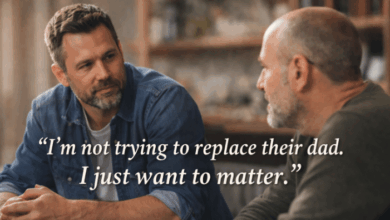
Feeling Like An Outsider As A Stepdad? How Your Presence Changes Everything
Support for Stepdads Facing Blended Family Challenges, Emotional Struggles, and Building Trust Over Time


Opening Transition
In the first post, we looked at how father absence can impact poverty, health, incarceration, and behavior. Those realities matter because they help explain the environment many stepdads step into.
However, they don’t tell the whole story.
While risk may increase in certain situations, something just as powerful can completely change the direction – a man who shows up. This is where support for stepdads becomes more than advice. It becomes influence, stability, and long-term impact.
 A Real-Life Stepdad Scenario

Let’s walk through a moment that might feel familiar.
You walk into the room and see your wife and her child talking and laughing. There’s a shared history there – memories, inside jokes, and moments you weren’t part of. Naturally, you sit down and try to join in.
No one is rude. No one is pushing you away. Yet something still feels off. You contribute to the conversation, but the response is short – polite, but not open.
Later that night, you’re left thinking, “Am I trying too hard?” or even worse, “Do they even want me here?”
This is the reality of feeling like an outsider as a stepdad. More importantly, it’s exactly why your presence – and how you show up – matters so much.
Father Factor 5: Teen Pregnancy
Children raised without consistent father involvement may face increased risks when it comes to early relationships and life decisions. As a result, they may seek validation in the wrong places or make decisions without strong guidance.
However, this isn’t about control – it’s about influence.
When a steady male presence exists in the home, it reinforces self-worth, boundaries, and decision-making confidence. As a stepdad, you don’t need to lecture or overstep authority to make an impact.
Instead, your influence often shows up in small but powerful ways. You ask questions instead of assuming, stay present instead of withdrawing, and model respect in how you treat your partner. Over time, those actions shape expectations – and expectations shape decisions.

Father Factor 6: Child Abuse and Neglect
Single-parent households often carry higher levels of stress and fewer built-in support systems. Consequently, that pressure can lead to emotional exhaustion, reduced patience, and inconsistent discipline.
Children don’t just respond to rules – they respond to environment.
Imagine a tense moment. A child is acting out, your spouse is overwhelmed, and the situation is escalating. Instead of reacting emotionally, you step in with calm control. You lower your tone, bring stability, and de-escalate rather than add to the tension.
That’s leadership. Over time, that steady presence reshapes the entire environment and reduces blended family challenges.
Father Factor 7: Drug and Alcohol Abuse
Without consistent guidance, children are more vulnerable to outside influences. Peer pressure, curiosity, and social environments can easily fill the gap when structure is missing.
This is where help for step dads becomes critical.
Your consistency matters more than you may realize. When you pay attention to behavior changes, ask questions without attacking, and set expectations calmly, you create accountability.
Even if a child resists, they notice. Over time, that presence reduces risk because you modeled something better.
Father Factor 8: Education
Education is one of the clearest areas where involvement changes outcomes. Children with engaged parental figures are more likely to stay focused, feel supported, and believe in their ability to succeed.
Fortunately, this doesn’t require perfection – it requires presence.
Something as simple as asking about school, showing up to events, and encouraging effort can shift a child’s mindset. When you ask, “How was school today?” and get “Fine,” most people stop there.
But you don’t. You follow up with, “What was the best part?” That extra effort builds connection, and connection builds confidence.
 The Significance of Stepfathers
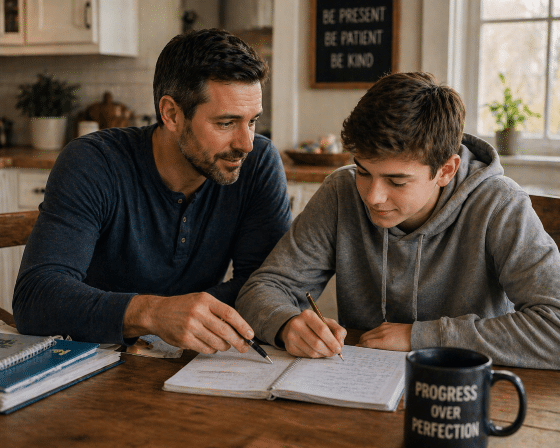
Stepfathers play a critical role in the lives of children under their care. That role is influenced by acceptance from the child, support from the mother, and the involvement of the biological father.
Even when those factors aren’t ideal, your presence still matters. You are adding stability to a situation that may have lacked it – and stability is powerful.
Bonding With Stepchildren: What Actually Works
If you’re dealing with stepdad not accepted feelings, it doesn’t mean you’re failing. It means the relationship is still forming.
Bonding with stepchildren happens through connection – not control. Spend time without pressure, show interest in their world, and listen without trying to fix everything.
As a result, this approach reduces stepdad relationship issues and builds trust over time. For more practical help, read Building Trust With Stepchildren: A Stepdad Guide.
When You Feel Like an Outsider
There will be moments when you feel like a stepdad feels like outsider. That feeling is part of the process – not proof something is wrong.
Many stepdads experience stepdad emotional struggles and feelings of being left out in family dynamics. However, relationships in blended families grow through consistency – not pressure.
Presence is what builds connection.
Scripture for the Journey
![Feeling like an outsider as a stepdad - Stepdad sitting quietly while family interacts, showing emotional distance]](https://supportforstepdads.com/wp-content/uploads/2026/04/Stepdad-sitting-quietly-while-family-interacts-1.png)
This applies directly to stepfatherhood. Growth is happening – even when it’s not visible.
Top 5 Tools for Stepdads
Top 5 Tools for Stepdads
1. Patience – Trust takes time
2. Consistency – Showing up matters
3. Emotional Control – Respond, don’t react
4. Support for Your Partner – Unity builds strength
5. Perspective – This is a long-term investment
Small Moments Create Big Change
Impact rarely comes from big breakthroughs. Instead, it comes from small, consistent moments.
A short conversation, a shared laugh, or a calm response during tension may seem small – but over time, they reduce blended family challenges and reshape relationships.
The Long-Term Payoff Most Stepdads Miss
The impact you’re making today may not show up today – but it will show up.
Later, it looks like trust, respect, connection, and sometimes gratitude. This is why stepdad support advice matters – it keeps you focused on the long-term outcome. You may also find encouragement in Stepfathers Who Stay the Course Are the Unsung Heroes of Blended Families.
Closing: You Are Part of the Solution

Blended families come with real challenges. However, they also come with real opportunity.
Stepdads who stay consistent help change outcomes across every one of these Father Factors – not overnight, but over time.
Call to Action
If you’re navigating stepdad emotional struggles or trying to find your place, you’re not alone.
Visit Support for Stepdads for real guidance, practical tools, and encouragement designed specifically for you.