Stepdad Burnout: When The Strong One Breaks
Why so many Stepdads Struggle in Silence—and How to Begin Healing


Mike stared at the TV, not even really aware of what was on. He knew his sophomore stepson, Stephen, had a baseball game in half an hour, and he was trying to rouse himself to go. Things had been rough with the kids for a while.
His ten-year-old biokid, Eden, was fighting with her eight-year-old stepsister, Molly, and his other teenager, Liz, had been asking him to practice driving with her nonstop. On top of that, his strained relationship with Stephen was causing severe tension between him and his wife– tension that was only exacerbated by his intense work schedule.
Mike was exhausted. He wanted to go to the game to show Stephen that even if they didn’t always get along, he would always be there to support him. He wanted to show his family that he was strong and could really be a super dad. But on the inside, he felt completely drained. He didn’t know why- it seemed like other dads were doing just fine. Why couldn’t he be like them? What was wrong with him?
What Mike didn’t know is that there was something wrong with him– but he wasn’t lazy, apathetic, or a bad stepdad. Mike was experiencing burnout, the invisible, cumulative effects of prolonged stress and the pressure to show up for everyone while running on empty himself.
What Burnout Looks Like in Stepdads
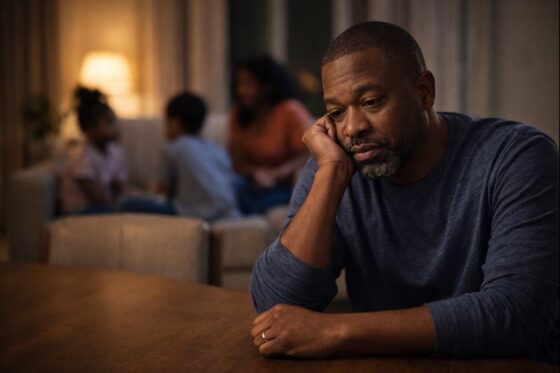
In stepdads, this might look and feel like emotional numbness, irritability, and withdrawal from the family. If you’re a stepdad feeling burned out, you might find yourself fantasizing about escape or even leaving the marriage to start over. Sometimes there are even physical symptoms, such as fatigue, headaches, sleep disturbances, and GI issues.
Why Stepdads Are Especially Vulnerable
Burnout is often related to role overload, which is huge in a stepdad’s life. Stepfathers have to face situations where there’s no clear authority role, and there’s a constant struggle between love and the lack of emotional security. Stepchildren often face loyalty binds that lead them to strained relationships with their stepparent – and that’s a hard reality to face when you’re determined to love and support a child. There’s also the financial and emotional pressure that comes with being a stepfather, but there’s another kind of pressure, too: the cultural pressure to stay silent.
If you look at the way stepfathers are treated in fiction and by the public, there’s an expectation that a “good” stepdad is always strong and supportive. When was the last time you read a story or saw a movie where the family rallied around the stepdad to support him emotionally? It almost feels petty to ask for support because you’ve been silently told your entire life that a stepdad’s job is to suck it up and be strong, no matter what.
But you can’t drive a car on an empty tank, and just trying to push through burnout is just as much of a bad idea. Let’s talk about why.
The Quiet Damage Burnout Causes – and What Actually Works
Burnout can cause incredible damage in your life– but it’s not like many other diseases, where the impact is noticeable. Instead, burnout’s damage is more insidious. It creates distance between you and your spouse and between you and your kids. It drives you to emotional disengagement and resentment, and numbness to everything that matters.

The exhaustion drives you to distraction; you can’t focus at work or at home, and it feels like any joy you felt is stolen away. It’s easy to slide into despair– but don’t lose hope! Psalm 34:18 reminds us that
Burnout isn’t the end, and there is a way forward. So what actually helps?
The Solutions to Burnout
Boundaries are a powerful antidote to burnout. A generous heart is a beautiful thing, but you can’t just keep giving and giving until there’s nothing left. You can’t set yourself on fire to save others! Rest is also powerful. That doesn’t just mean “get more sleep,” that means actually taking time to do the things that recharge you and make you feel fulfilled.
Maybe that means taking a vacation with friends, or just your wife (without the kids)… or even a solo trip. Perhaps that means carving out more time for your hobbies, or spending twenty minutes each day in quiet solitude where nobody’s allowed to bother you. Whatever it means for you, rest is critical to burnout recovery.
You also cannot recover from burnout without support. Counseling can be invaluable– and we’re not talking about couples’ counseling. However, those can help, and your mental health professional, therapist, or pastoral counselor might want to bring your wife into sessions. But when it comes to burnout, you have to put yourself first, and that means your counselor is first and foremost on your side.
There are other support options, too. Friends and support groups can be helpful, and one of the best balms for burnout is spiritual counseling. Matthew 11:28 says
and we need to remember that when we’re thinking about where we can go for the kind of supportive help we need. Talking to your pastor or faith leader can really help– some churches even have specific offices for pastoral counseling. They can provide you with the foundation you need to regain your emotional strength.
Your Most Important Ally: A Gentle Word to Wives

Finally, there’s one more person who is your strongest ally in the fight against burnout. Your wife is the most important person supporting you in this struggle; she’s the one who can validate you at home and advocate for you to the kids and the rest of the family. But she can’t help you if you don’t talk to her.
Silence isn’t stoic strength. Silence is self-sabotage.
When you talk to your wife and open up about the way the strain of burnout is impacting your life, she can fight for you. She can help enforce your boundaries, and the two of you can come up with a plan to help things get better.
Remember when you were dating? You wouldn’t have fallen in love if you weren’t able to communicate about your emotions. Tap into that well of love and face burnout together.
And wives, if you hear your husbands saying anything like this:
- “I’m just really tired lately. It’s nothing.”
- “I don’t need help. Other people have it worse.”
- “I feel like I’m always behind, no matter how hard I try.”
- “I should be able to handle this.”
- “I don’t even know why I’m so worn out.”
- “I just need a little quiet.”
- “I don’t want to disappoint anyone.”
Gently, lovingly, and quietly talk to him about burnout. It’s quite possible that he’s experiencing it and doesn’t know how to bring it up.
Giving Yourself Permission to Heal
Recovering from burnout is possible, but you need to give yourself both the space and the grace to do it. As Galatians 6:9 instructs us,
You won’t get better from burnout overnight; it takes time! But if you don’t take the first steps, nothing will ever change. If you’re dealing with burnout, the first thing to do is to say something. If you don’t advocate for yourself, nothing will ever change. And you can do it! You’re worth it. Your happiness is worth it. Your peace is worth it.

If you’ve ever dealt with burnout before, please share your story and advice in the comments. It can really help a stepdad with similar experiences. And for more advice on taking care of yourself as a stepdad, check out the Support for Stepdads blog!