
Guilt Parenting: When Love Turns Into A Trap
Why Parenting from Guilt Hurts More Than It Helps


Parents wonder why the streams are bitter, when they themselves have poisoned the fountain. ~ John Locke
In an earlier series, I wrote about the various parenting styles: authoritative, authoritarian, permissive (also known as indulgent), and uninvolved. An aspect of the permissive or indulgent style is guilt parenting.
In this post, I’ll discuss what guilt parenting is and how to recognize it. The following post will discuss what makes guilt-based parenting ineffective and provide strategies on how to break the cycle.
 In this post, we’ll explore what guilt parenting is and how to recognize it. In the next post, we’ll discuss why guilt parenting is harmful and strategies for breaking the cycle.
Healthy Boundaries and Blended Families
Every healthy family—especially a blended one—needs clear boundaries. These boundaries protect emotional well-being and help the household run smoothly. Even when breaking a boundary feels like the right thing to do in the moment, it often leads to negative consequences for everyone involved.
One of the most common results of broken boundaries is guilt parenting. It’s a pattern that can occur in both blended and traditional families. Still, it’s particularly common among non-custodial parents who are trying to maintain a close relationship with their children.
What is Guilt Parenting?
Guilt parenting happens when a parent makes decisions out of guilt or fear rather than what’s right or best for the child.
- Rewarding poor behavior or avoiding discipline.
- Making excuses for a child’s actions instead of setting limits.
- Overcompensating with gifts or privileges.
- Allowing the child to dictate rules or disrespect authority.
A parent might feel guilty for not seeing their child every day, such as during a divorce, remarriage, the addition of a new sibling to the family, or relocation of the child away from familiar surroundings.
Driven by guilt, the parent may fear losing their child’s affection. Thoughts like “They won’t want to visit anymore” or “They’ll think I’m mean” can lead to decisions that sacrifice long-term growth for short-term peace.
Another aspect of guilt parenting is that the parent only sees the present situation. The parent sees that their child is upset. In response, the parent may feel guilty or fearful and react to these feelings rather than what is best for the child and the entire family. If the parent truly wants what is best for the child and the family, they need to step back and look at the big picture.
Questions Every Guilty Parent Should Ask
If you suspect guilt is shaping your parenting decisions, pause and ask yourself:
- What is this teaching my child?
- How is this helping or hurting my child’s future?
- How will this make the other children in the family feel?
- What does my spouse think of this?
Recognizing Guilt Parenting
There are as many different ways to guilt parents as there are guilty parents, but certain patterns are easy to spot.
- When a child wants something and starts to throw a tantrum or start crying, the parent gives the child what they want.
- If a child starts yelling at or bossing the parent, the parent complies with the child as if the child were the parent and the parent were the child.
- If a child is given more of a say in household matters than the adults, it is a telling sign of guilt parenting.
- Often, a parent who guilt-trips parents will give the child equal or top say in how things are run in the home.
- Buying presents for the child on a widespread basis is another symptom of guilt parenting.
- Trying to be the “fun parent” to stay liked.
One dad shared he used to take his daughter shopping every single visit—sometimes twice a week—because he didn’t want her to associate his home with disappointment. It wasn’t until later that he realized she had learned to equate love with getting something new.
Excuses for Guilt Parenting
- “I just want her to feel at home here,”
- “I want her to know how much I love her,”
- “I don’t want him thinking I am mean,”
- “I don’t want him not to want to come and visit anymore,”
- “I have to protect my child,” etc.
If you are the spouse of a guilty parent, you could hear the following defenses:
- “You hate my child!”
- “You don’t care about my child!”
- “You are out to get my child!”
- “You don’t want my child to have anything good!”
- “You don’t want my child to be a part of this family,” etc.
If you also have children, you will probably feel it is their children versus your children. Often, the guilty parent will come across as having a strong victim mentality, nothing is their fault or their child’s fault.
Moving Toward Healthier Parenting
We all want to think of ourselves as good parents, but the reality is that we all believe that all parents make mistakes.
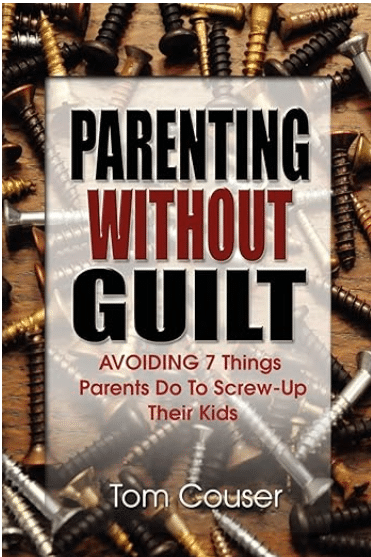
In his book, Parenting Without Guilt, the author Tom Couser identifies seven of the most common parenting pitfalls and offers practical steps to overcome those mistakes. Click on the previous link or book to purchase a copy.
Closing Thoughts
Parenting from guilt may feel loving, but it often robs children of the very structure and strength they need. True love sets boundaries, disciplines wisely, and keeps the long-term view in sight.