
Water Safety Matters: How To Prevent Drowning And Protect Your Family Year-Round
Water Safety for All Ages: Protecting Children and Preventing Drowning

Introduction
As summer winds down, the need for water safety remains more important than ever. According to the Centers for Disease Control and Prevention (CDC), drowning is the number one cause of death for children between the ages of 1 and 4. Even adults are at risk –adult drowning deaths are on the rise for the first time in two decades. Whether you’re near a backyard pool, lake, river, or even the bathtub, being proactive can save lives.
Understanding the Risk
Drowning can happen silently and in as little as 30 seconds. Most childhood drownings occur during non-swim times, when adults may not be paying attention. Adults, too, are often overconfident in their swimming abilities, especially in unfamiliar or natural bodies of water. Being aware of the risks is the first step toward prevention.
The Five Layers of Protection
1. Barriers and Alarms
Physical barriers such as four-sided fencing with self-latching gates around pools can prevent young children from accessing water unsupervised. Alarms on doors, gates, and pool covers add another layer of protection.
Tip: Regularly check fences and latches for wear and tear.
2. Supervision
Drowning is often silent. Children in or near water need your full attention. Designate a “Water Watcher”; whose only job is to supervise.
Tip: Rotate supervision duties among responsible adults to stay alert.
3. Water Competency
Knowing how to swim is not enough. Water competency includes the ability to tread water, float, and recognize hazards. Swimming lessons with certified instructors can reduce drowning risk in children by up to 88%.
Tip: Enroll both children and adults in refresher swim courses annually.
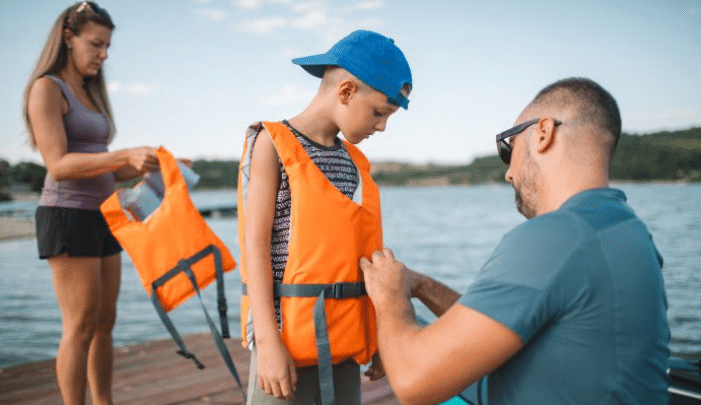
4. Life Jackets
Properly fitted, U.S. Coast Guard-approved life jackets save lives, especially in lakes, rivers, and oceans where natural elements increase risk.
Tip: Keep life jackets accessible and teach children how to put them on properly.
5. Emergency Preparation
Be ready for the unexpected. Keep a phone nearby to call 911 and consider getting CPR certified.
Tip: Post emergency numbers and CPR steps near the pool or in your home.
Special Considerations by Location
Home Pools
Install proper fencing and remove toys that might tempt children to approach the water unattended.
Bathtubs
Never leave a child unattended, even for a moment. Drain water immediately after use.
Natural Bodies of Water
Beware of strong currents, hidden drop-offs, and cold water shock. Always wear a life jacket.
Public Pools or Waterparks
Stay within arm’s reach of non-swimmers and obey lifeguard instructions.
Common Water Safety Myths
• “They’re just playing — I’d hear them if they were drowning.”
• “Floaties are just as safe as life jackets.”
• “I can jump in and save them quickly if something goes wrong.”
• “Good swimmers don’t drown.”
Taking Action: How Families Can Stay Safe
• Enroll in swim lessons early.
• Layer your safety strategies — never rely on just one.
• Inform all caregivers of your household’s water safety rules.
• Model water-safe behaviors for your children.
• Encourage your community to adopt these practices.
Resources and Where to Learn More
• CDC Drowning Prevention: https://www.cdc.gov drowning/
• National Drowning Prevention Alliance: https://ndpa.org/
• Red Cross CPR & First Aid Courses
• Local YMCA or community pool swim programs
Conclusion
Drowning is preventable. By remaining vigilant, layering safety strategies, and equipping your family with the proper knowledge and tools, you can protect your loved ones from this silent threat. Stay alert, stay informed, and stay safe — all year long.
Throughout the US, many kids will be returning to school. It’s not unusual for students and parents alike to experience anxiety as the new school year approaches. After months of enjoying their summer vacation, it can be unnerving to think of back-to-school preparation.
But it’s possible to make this transition period much easier for you, your spouse, and your children. Here are some back-to-school preparation tips to help the whole family get ready for the new school year: